The Blue-tongued Skink Has a Heart of Gold - Animals | HowStuffWorks
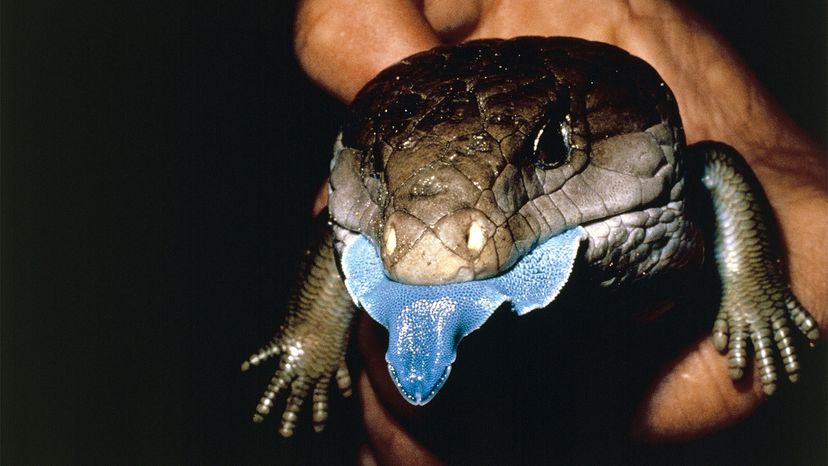
Looking for a reptile to keep as a pet whose heart is as true blue as its tongue? You may want to look no further than the aptly named blue-tongued skink. According to myriad skink owners and Marisa Nagele, an educator at the Elmwood Park Zoo in Norristown, Pennsylvania, certain subspecies of blue-tongued skinks are intelligent, personable critters that even enjoy limited interaction with humans.
In the wild, blue-tongued skinks are found in the warm, sandy areas or grassy, savannah-like regions of Australia, New Guinea and Indonesia. They will often dig a burrow with their snouts or legs, or find an abandoned one to live in. They look very much like snakes with stubby legs, and Nagele says the skink uses that to its advantage.
"Skinks are a fairly harmless animal," she says. "They aren't poisonous, they don't have big teeth, they can't constrict their food or anything. So, when there are predators [like hawks] around, one of their biggest defenses is to pretend to be something a little scarier. In their case, it's a snake."
Nagele says the skink has what's called a parietal eye — a light sensing organ — on the top of its head that can tell when a shadow passes over.
Sensing a predator flying by, "[the skink will] actually tuck their tiny legs under their body," she says. "They will actively slither around very similar to a snake. They're going to stick their tongue out and try to slither their way away from predators," Nagele says.
Pretty clever, right? And then there's its tongue.

Comments
Post a Comment